
2026-09-22 ·
Permits and Site Requirements for Portable Toilets at Residential Construction Projects in Madison County
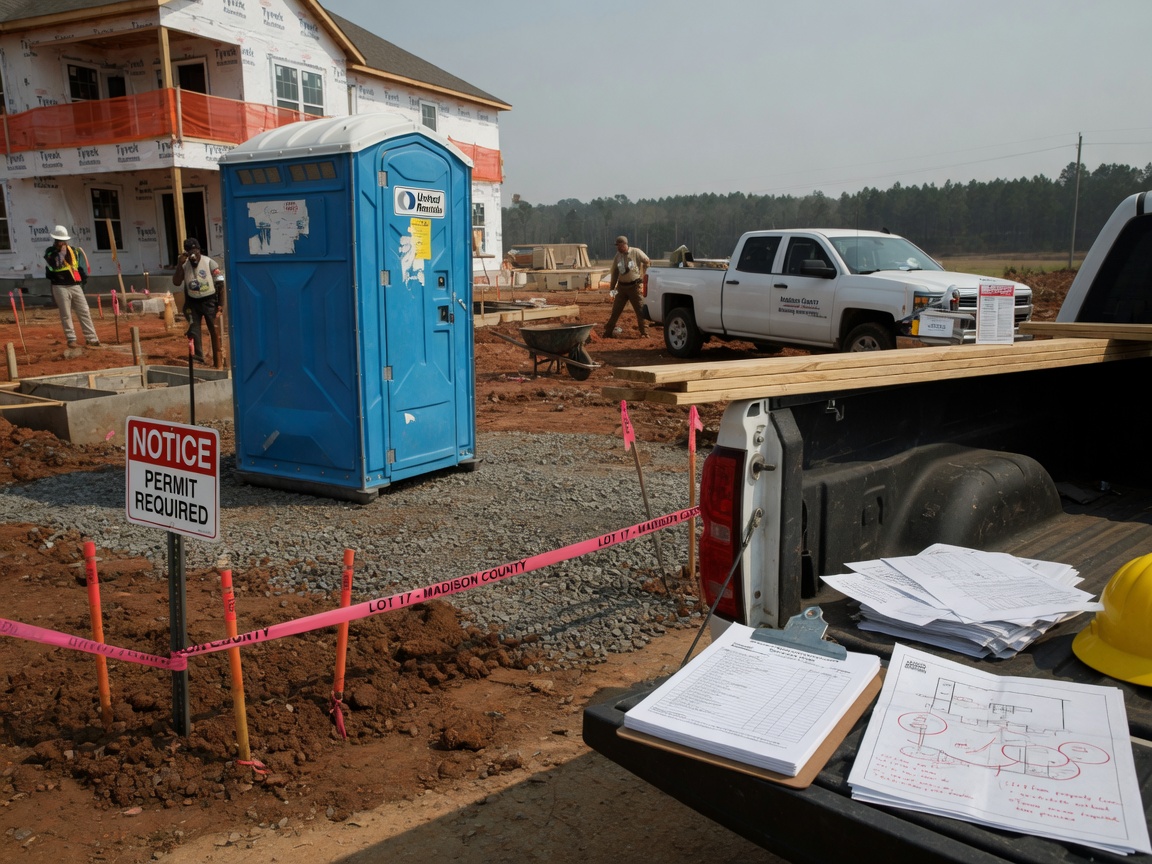
Before you rent a portable toilet for a residential construction project in Madison County, Alabama, you need to secure the proper permits and meet site requirements set by the county and your municipality. Most residential construction sites in Madison County require a portable toilet permit from the county building department, and you'll typically need to file this 5–10 business days before delivery. The City of Huntsville, Madison, Decatur, and other municipalities in the county each have their own specific codes governing placement, setback distances from property lines and water sources, and accessibility standards. Failing to pull the right permits can result in fines of $200–$500 and work stoppages, so it's worth getting this right from the start.
Permit Requirements for Madison County Residential Sites
Madison County's building and zoning departments require a portable toilet permit for any residential construction project that will last more than 7 days or involve more than 5 workers on-site. You'll need to submit a site plan showing the exact location of the unit, setback measurements, and proof that the property owner consents to the placement. The permit application typically costs $25–$75 and is processed within 3–5 business days. If your project spans multiple phases or moves to a second address within the county, you'll need a separate permit for each location. Contact the Madison County Building Department or your city's planning office—Huntsville, Madison, and Decatur each maintain their own permitting systems—to confirm current fees and processing times. Having your site plan ready with measurements and photographs of the proposed location speeds up approval considerably.
Site Setback and Placement Rules
Madison County requires portable toilets to be placed at least 50 feet from any potable water well or spring, and 25 feet from property lines shared with neighboring residential properties. The unit must sit on level, well-drained ground to prevent pooling and soil erosion—a critical concern in the red clay soils common throughout Madison County, which retain moisture and can shift under weight if not properly prepared. If your site has poor drainage or slopes steeply, you may need to pour a 4-inch gravel or recycled asphalt pad to create a stable, permeable base. The toilet must also be positioned where it won't block emergency vehicle access to the construction site and must remain at least 10 feet from any building entrance or exit. For residential lots in subdivisions like those around Huntsville's Meridian area or Madison's downtown neighborhoods, confirm with your HOA or property manager whether additional restrictions apply; some communities prohibit portable toilets within sight of main roads or require screening with temporary fencing.
Water and Soil Considerations in Madison County
The terrain and soil composition across Madison County directly affect how you prepare your portable toilet site. Much of the county sits on limestone bedrock with clay-rich topsoil, particularly in the Huntsville and Madison areas, which means water doesn't drain quickly and the ground can become unstable if saturated. If you're working on a site near Paint Rock River, Flint River, or any of the smaller tributaries that cut through the county, you'll face stricter setback rules—typically 100 feet or more from the water's edge. Winter and early spring bring frequent rain and occasional freeze-thaw cycles, so a site that looks dry in summer may become boggy by November. Placing your portable toilet on a slight rise or on a prepared pad prevents water from pooling around the unit and keeps the ground firm enough for the service truck to access it safely. If your site is in a low-lying area or near a creek, plan for a longer, more stable base and confirm with the county that your placement meets all water-protection guidelines.
ADA Compliance and Accessibility Standards
If your residential construction project involves more than 10 workers or will operate for longer than 30 days, Madison County requires at least one ADA-compliant portable toilet on-site. This unit must have a wider door (at least 36 inches), grab bars, and an accessible route from the main work area—typically a firm, level path at least 36 inches wide with no steep slopes. The ADA-compliant toilet must be positioned so that a wheelchair user can approach and enter without obstruction, and it cannot be placed in a corner or against a fence where access is blocked from one side. Even if your project doesn't legally require an ADA unit, installing one demonstrates good faith and protects your crew if an injured or mobility-limited worker needs to use the facilities. Huntsville and Madison both enforce ADA standards strictly, and violations can delay your permit renewal or result in fines.
Utility Clearance and Underground Hazards
Before you finalize your portable toilet placement, call 811 (Alabama's One Call system) at least 3 business days before delivery to have all underground utilities marked—gas lines, electric, water, and sewer. Madison County residential sites frequently have buried utility lines running across properties, and striking a gas line or electrical conduit can cause injury, project shutdown, and significant liability. Once utilities are marked, photograph the paint marks and keep the images on file. Your portable toilet must be placed at least 10 feet away from any marked utility, and if your site has limited space, work with your construction site portable toilet rental provider to identify the safest location. If utilities are too close or too numerous, you may need to rent a smaller unit or place it on an adjacent property (with written permission from the owner). This step is non-negotiable and protects both your crew and the county's infrastructure.