
2026-09-22 ·
Portable Toilet Setup Guidelines for Construction Projects Along I-565
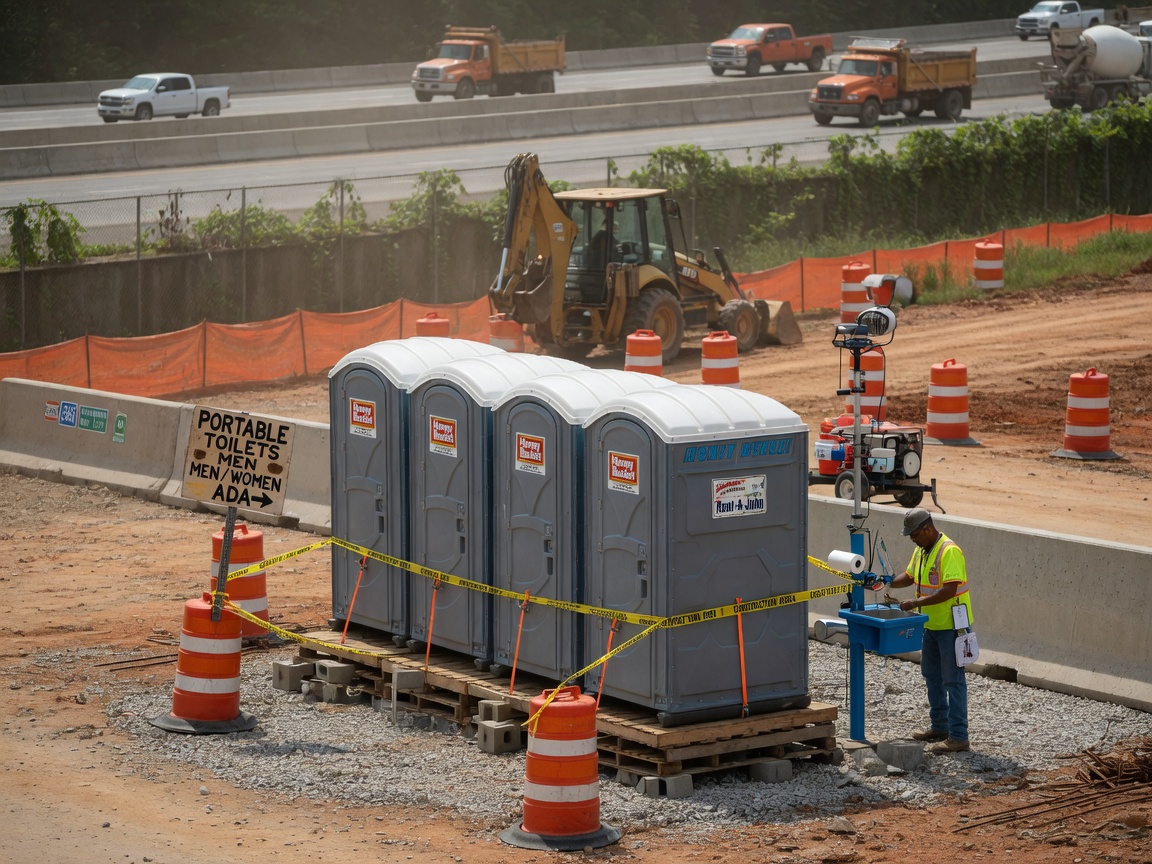
Most construction projects along I-565 between Huntsville and the Madison County line require 2 to 4 portable toilets per 50 workers, depending on shift length and project duration. The Alabama Department of Transportation and local building codes typically mandate one unit per 25 employees on active sites, but highway-adjacent work—especially near the interstate's heavy traffic patterns—benefits from extra capacity to avoid bottlenecks and reduce worker downtime. Placement decisions start weeks before equipment arrives, because the terrain, soil composition, and seasonal weather patterns around Huntsville directly affect where units can safely sit and how often they'll need servicing.
I-565 construction zones span diverse ground conditions: clay-heavy soils near the Madison County border, occasional rocky outcrops closer to Huntsville, and areas prone to standing water during Alabama's spring rains. These realities shape your setup strategy. A portable toilet sinking into soft ground or becoming inaccessible after a downpour isn't just inconvenient—it halts work and creates safety hazards. Understanding the site's drainage, slope, and soil bearing capacity before you place a single unit prevents costly repositioning and keeps your crew productive.
Assess Site Drainage and Ground Stability
Portable toilets must sit on level, well-drained ground to function reliably and remain accessible throughout the project. Sites along I-565 often experience runoff from the interstate itself, especially during the wet months from November through March when Alabama receives 4–6 inches of rain. If your construction area slopes toward a drainage swale or sits in a low-lying zone, position units on a slight rise or install a gravel pad (typically 4–6 inches deep) to elevate the base and improve drainage.
Clay soils, common in Madison and Limestone Counties near the interstate corridor, retain moisture and can become impassable after heavy rain. Before placement, probe the ground with a shovel or auger to confirm soil depth and stability. If the top 12–18 inches are soft or waterlogged, a reinforced concrete pad or heavy-duty gravel base rated for the unit's weight (roughly 3,000–4,000 pounds when full) is essential. Rocky terrain, found in some northern sections near Guntersville and Hartselle, may require a leveling pad to prevent tipping and ensure proper drainage underneath. Spending a few hours on site prep saves weeks of service delays and worker complaints.
Placement and Worker Access
Position portable toilets within 200–300 feet of active work areas, following OSHA guidelines that most Alabama contractors and site supervisors enforce. Closer is better—workers are more likely to use facilities if they don't lose 10 minutes walking to a distant unit. On I-565 projects, this often means placing units near the equipment yard or crew staging area, away from heavy machinery traffic but visible and accessible.
Ensure a 6–8 foot clear perimeter around each unit for delivery truck access and servicing. Merrimack Portable Toilets' service vehicles need room to approach from multiple angles; if units are boxed in by equipment or materials, servicing becomes difficult and expensive. Mark access routes clearly and communicate them to your site manager and equipment operators. On highway-adjacent sites, coordinate with traffic control and ensure units don't obstruct sight lines or create safety hazards for workers or passing vehicles. If your project requires ADA Compliant Portable Toilet Rental, reserve a dedicated, level approach path with firm footing—no gravel that shifts or soft spots that create wheelchair drag.
Seasonal Considerations for Alabama Weather
Alabama's climate swings from mild winters (occasional freezes below 32°F) to hot, humid summers exceeding 90°F. Each season affects portable toilet performance and maintenance frequency. During winter months, especially in elevated areas near Cullman and Hartselle, frozen waste tanks and water lines can disable units. If your I-565 project runs through November to February, discuss winterization with your rental provider; Winterizing Your Portable Restroom Units for Occasional Freezes in Alabama covers heating, insulation, and antifreeze strategies that keep units operational when temperatures dip.
Summer heat accelerates bacterial growth and odor, so units may need servicing every 2–3 days instead of the typical weekly schedule. Plan for increased service frequency and confirm availability with your rental company before peak season. Spring runoff and occasional heavy thunderstorms (March–May) can flood low-lying sites; if your project area is prone to ponding, elevate units on pads and ensure drainage channels direct water away. Dust storms and wind are less common but can affect unit stability and sanitation on exposed highway corridors—secure units with tie-downs if wind exposure is significant.
Compliance, Permits, and Coordination
Alabama construction projects on or near state highways require coordination with local authorities and often ALDOT (Alabama Department of Transportation) approval, especially if units sit within the interstate right-of-way or affect traffic flow. Check with your site engineer and local Madison County or Limestone County building departments early. Some jurisdictions require portable toilet permits; others mandate specific setbacks from property lines or water sources. Huntsville and Madison typically enforce stricter standards than smaller towns, so clarify requirements before placement.
Permits and Site Requirements for Portable Toilets at Residential Construction Projects in Madison County details permitting processes in the region. Even if your project is commercial rather than residential, the underlying principles—distance from wells, drainage considerations, and local zoning—apply. Coordinate with your site safety officer to ensure portable toilets are included in your site safety plan and that workers know their locations. Document unit placement on your site plan and share it with your rental provider so they can plan efficient service routes.
Sizing and Unit Selection
Construction Site Portable Toilet Rental units come in standard configurations: single-stall units (standard duty, 40–60 gallon capacity) and multi-stall trailers for larger crews. Standard units suit crews of 10–25 workers; for 50+ workers, consider 2–3 units or a restroom trailer with multiple stalls and hand-washing stations. I-565 projects often run 24-hour shifts or multiple crews, so capacity planning must account for peak usage times. A single unit serving 40 workers on a day shift may handle the load, but that same unit serving a rotating 24-hour operation will need emptying every 1–2 days.
Hand-washing facilities are equally critical; many sites pair portable toilets with Hand Washing Station Rental to meet OSHA and local health code requirements. Dust and debris from highway construction make hand-washing essential, not optional. Budget for both toilet and hand-washing capacity when planning your site layout.
Service Frequency and Long-Term Planning
Standard portable toilet service runs weekly for typical construction sites, but I-565 projects with heavy traffic, long shifts, or large crews often need service every 3–5 days. Confirm your rental agreement specifies service frequency and includes emergency service (Merrimack operates 24 hours, so urgent calls can be handled quickly). Budget $50–$150 per unit per service visit, depending on the level of cleaning and restocking required.
For projects lasting 6+ months, negotiate a fixed monthly rate rather than per-service pricing; this stabilizes costs and ensures consistent availability. If your project timeline extends into multiple seasons, plan for winterization costs (roughly $100–$300 per unit) and increased summer servicing. Communicate your project schedule clearly with your rental provider so they can reserve equipment and staff accordingly.