
2026-09-22 ·
Portable Toilet Placement and Waste Handling Near Waterways in the Huntsville Area
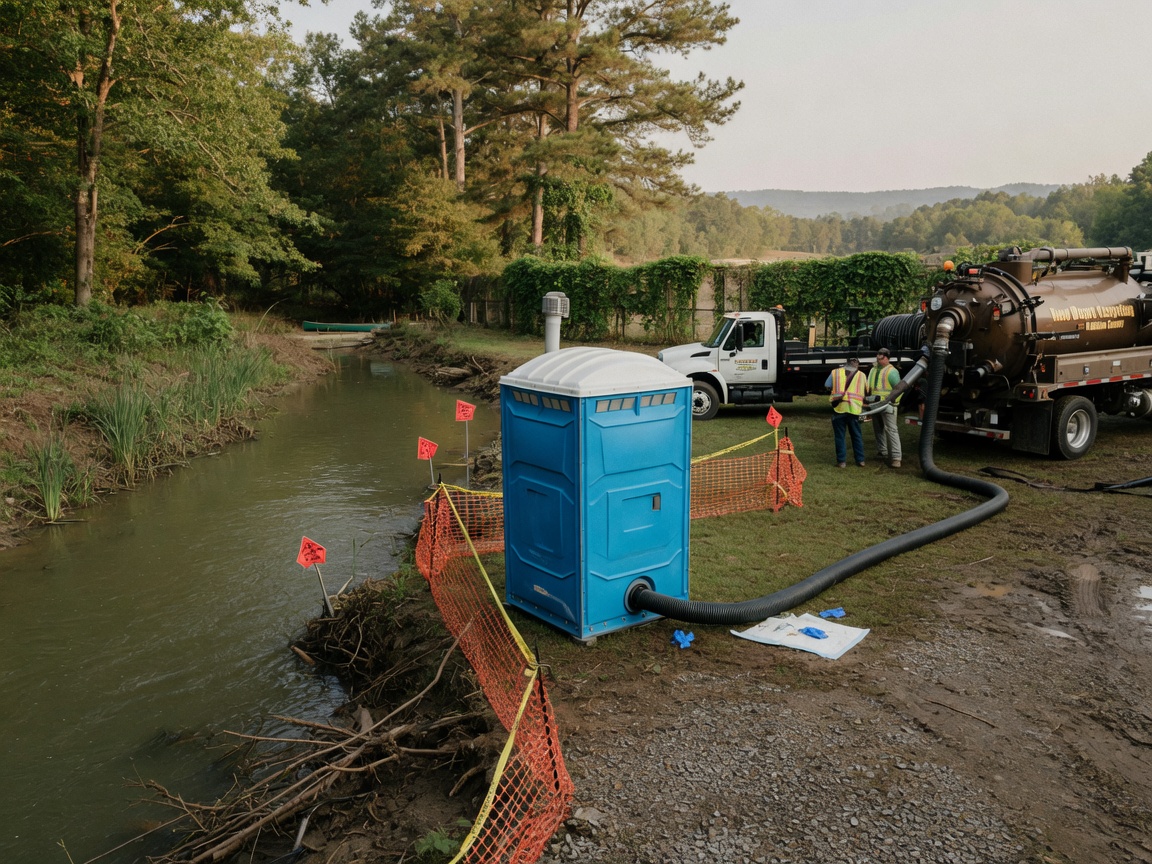
Portable toilet placement within 100 feet of any waterway in the Huntsville area must maintain a minimum setback of 75 feet from the water's edge, and in sensitive areas near the Tennessee River or its tributaries, that distance can extend to 150 feet depending on Madison County's specific site assessment. Alabama's Department of Environmental Management (ADEM) enforces these rules strictly because groundwater contamination and surface water pollution pose real risks in this region, where the Tennessee River system feeds into major aquifers that supply drinking water to Madison County and surrounding communities. Whether you're managing a construction site near Decatur, an event venue around Monte Sano Mountain, or a residential project in Madison, understanding these setback requirements and waste-handling protocols isn't optional—it's the foundation of legal, environmentally responsible portable toilet deployment.
Waterway Setback Requirements in Madison County
The Alabama Department of Environmental Management classifies waterways into categories, and each carries different setback mandates. Perennial streams—those that flow year-round, including tributaries that feed the Tennessee River—require a 75-foot minimum separation from portable toilet units. Intermittent streams, which flow seasonally (common in the foothills around Huntsville and Guntersville), still demand a 50-foot setback because they recharge groundwater during wet months and can transport contaminants into aquifers. Wetlands adjacent to waterways add another layer: portable toilets cannot be placed within 100 feet of any wetland boundary without a written environmental assessment and often a variance from the county. The reason is straightforward—these areas filter water naturally, and waste seepage compromises that filtration. If your site sits within the floodplain of any creek or stream (check the FEMA flood maps for your property address), you'll need additional permits and may be prohibited from placing standard units altogether. Consult with the Madison County Environmental Services office before finalizing any placement plan; they can confirm exact waterway classifications and required setbacks for your specific address.
Soil and Groundwater Conditions Around Huntsville
Huntsville and the surrounding area sit on karst geology—limestone bedrock with sinkholes, underground streams, and rapid groundwater movement. This terrain is a double-edged sword: it means excellent drainage in most cases, but it also means contaminants travel fast and far if they escape a portable toilet tank. Soil permeability in Madison County typically ranges from moderate to high, especially in the Decatur and Athens areas where limestone outcrops are visible. A leak from a standard portable toilet can reach groundwater in weeks rather than months, and once in the aquifer, it spreads quickly toward wells and surface intakes. This is why waste containment—not just placement distance—matters so much. Portable Toilet Service & Cleaning becomes non-negotiable; units must be pumped every 7–10 days during active use, and more frequently if rainfall is heavy. The porous soil also means that during the wet season (November through March, when Huntsville receives 50–60 inches of rain annually), groundwater tables rise, and setback distances become even more critical. If you're planning a multi-week event or construction project, factor in weekly servicing costs ($150–$300 per pump-out) and confirm that your site's soil composition won't accelerate contamination risk.
Waste Handling and Containment Best Practices
Proper waste handling begins the moment a portable toilet is delivered. All units must sit on level, stable ground—never on slopes steeper than 2%, which can cause tank tilt and seal failure. Place units on a gravel or rubber mat base to prevent direct soil contact and to catch any minor leaks before they infiltrate. Inspect the tank seal and all connection points before use; a single hairline crack can leak 5–10 gallons per day undetected. During operation, ensure that the access port is always locked and that the unit is positioned to direct any overflow away from the nearest waterway. In the Huntsville area, summer thunderstorms can dump 2–4 inches of rain in an hour, so slope the ground around the unit's base to channel runoff away from sensitive areas. If your site is within 200 feet of a waterway, consider Emergency Portable Toilet Rental backup units and more frequent pumping schedules; one failed unit during a storm event can create a compliance violation and environmental damage in minutes. Document all service dates, pump-out volumes, and any spills or maintenance issues in a site log—regulators may request this record if there's ever a water-quality complaint.
Regulatory Compliance and Permitting
Madison County requires a portable toilet placement permit for any unit positioned within 500 feet of a public water supply intake or within the wellhead protection zone of a municipal well. Huntsville's water system draws from the Tennessee River and several groundwater sources, so most commercial sites and large events require advance permitting. The application process typically takes 5–10 business days and costs $50–$150. For Construction Site Portable Toilet Rental, the general contractor must submit site plans showing unit placement, waterway locations, and soil composition. Residential projects in Madison often fall under different rules; check with the county before assuming a single unit on a residential lot is exempt. If your site is near a sensitive area—such as the Huntsville Spring, which supplies drinking water to the city—expect heightened scrutiny and possible denial of standard units in favor of Luxury Restroom Trailer Rental or ADA Compliant Portable Toilet Rental options with enhanced containment systems. Merrimack Portable Toilets operates 24 hours and can help navigate these permitting steps; call ahead to confirm your site's regulatory status before placing an order.
Seasonal Considerations for Waterway Protection
Huntsville's climate shifts dramatically between seasons, and each change affects waterway risk. Winter and early spring (December–April) bring sustained rainfall and snowmelt, raising creek and stream levels and accelerating groundwater recharge. During this period, any portable toilet within the 75–150 foot setback zone poses heightened contamination risk because water is moving fast and infiltration is rapid. Summer (June–August) brings occasional severe thunderstorms but lower baseline groundwater levels; however, the storms themselves can overwhelm drainage systems and cause temporary flooding. Fall (September–November) is typically drier, but leaf litter and debris can clog drainage around units, trapping moisture and promoting tank corrosion. If your project spans multiple seasons, adjust your service schedule: increase pump-outs to every 5–7 days during wet months, and maintain weekly service even in drier periods to prevent tank degradation. For Event Portable Toilet Rental around Monte Sano Mountain or along the Tennessee River, confirm the event date well in advance so that seasonal weather patterns can inform your unit selection and placement strategy.