
2026-09-22 ·
Seasonal Maintenance Schedule for Portable Toilet Rentals in the Tennessee Valley
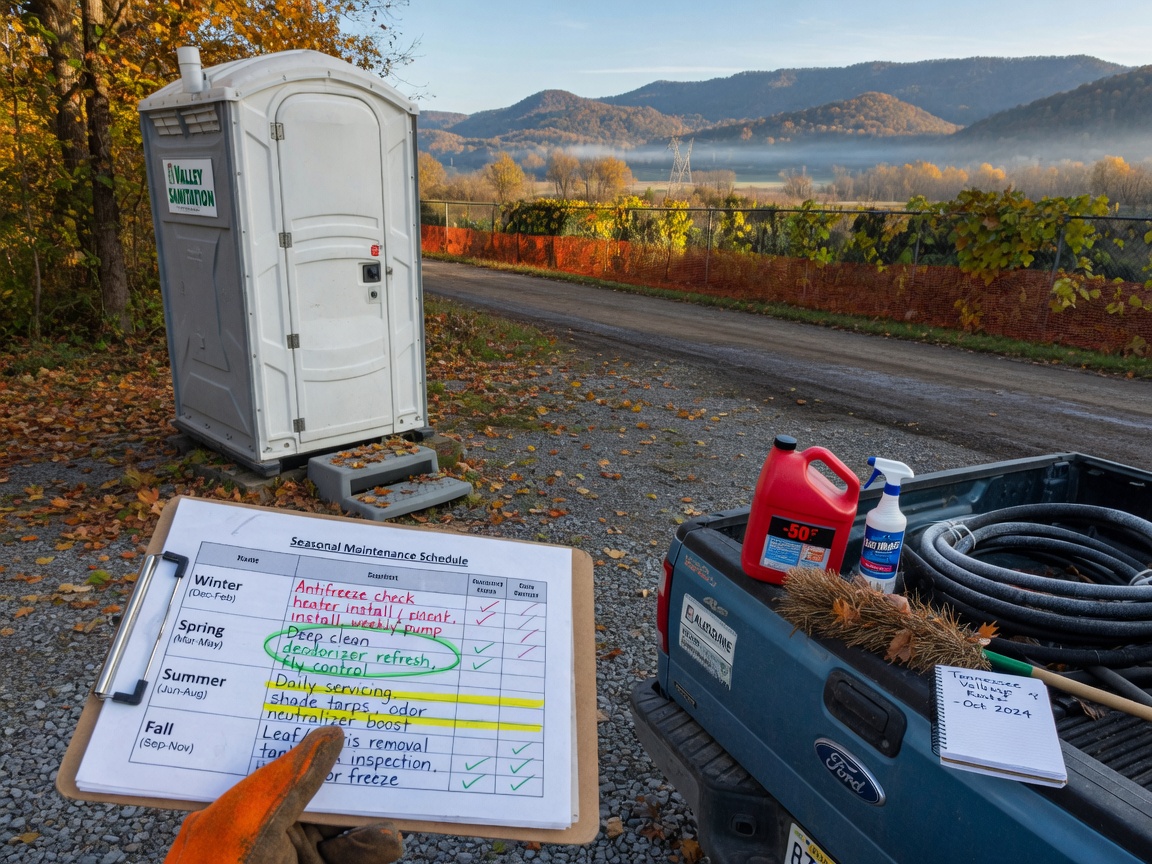
Portable toilet maintenance in the Tennessee Valley follows a predictable seasonal cycle tied directly to the region's climate swings. Spring requires deep cleaning and system checks after winter dormancy; summer demands extra pumping and odor control as heat accelerates bacterial growth; fall is the window to prepare units before freeze risk arrives; and winter calls for antifreeze protocols and reduced-frequency servicing. Most operators in Huntsville, Madison, Decatur, and the surrounding Alabama area schedule their heaviest maintenance push in late March through April, then again in September through October. Units rented year-round typically need service every 3–5 days in summer months versus every 7–10 days in winter, depending on usage and ambient temperature. Understanding these seasonal patterns keeps your portable toilet rental investment performing and extends unit lifespan to 8–12 years with proper care.
Spring Maintenance: Thaw and Inspection
After Alabama winters—which bring occasional freezes and extended periods of cold dampness in the Tennessee Valley—portable toilets emerge from their dormant season needing thorough inspection. Tank seals can crack if water trapped inside freezes and expands, and rubber gaskets become brittle in prolonged cold. Begin spring service by checking all exterior connections, hoses, and valve stems for visible damage or leaks. Open each unit and inspect the interior tank for sediment buildup, mold growth on walls, and any signs of structural compromise. This is the ideal time to replace worn gaskets, reseal tank seams if needed, and flush systems with clean water to remove winter debris. Many operators in the area schedule their first major service cycle in late March, before the construction season ramps up along I-565 and throughout Madison County. If you're renting units for construction site projects, spring inspection becomes non-negotiable—contractors expect reliable facilities from day one. Chemical treatment systems should be tested to ensure pumps and dispensers still function after months of inactivity. Restocking sanitizer and deodorant supplies happens now, before demand surges.
Summer Heat: Frequency and Odor Control
Summer in the Tennessee Valley brings sustained heat, high humidity, and rapid bacterial proliferation inside portable toilets. Ambient temperatures regularly exceed 85°F from June through August, accelerating waste decomposition and creating aggressive odor conditions. Servicing frequency should increase to every 3–4 days for heavily used units and every 5–7 days for moderate-use rentals—significantly more often than winter schedules. Chemical treatment becomes critical: ensure tanks are filled with appropriate holding tank treatment that kills anaerobic bacteria and masks odor. Ventilation systems work harder in heat; check that all vent pipes are clear of debris and that the roof-mounted vents aren't blocked by dust or insects. For event portable toilet rentals in Huntsville or Madison during summer months, plan for additional mid-day service runs, especially at outdoor festivals or construction events where usage spikes. Deodorizing sprays and hand sanitizer refills deplete faster in heat. Monitor tank levels closely—summer sun warms the waste, increasing gas pressure inside tanks, which can lead to backups if units aren't pumped before reaching 75% capacity. Inspect seals and gaskets monthly during summer; heat and UV exposure degrade rubber faster than any other season.
Fall Preparation: Winterization Readiness
September and October are the critical window to prepare portable toilets for Alabama's freeze season. While the Tennessee Valley rarely experiences prolonged deep freezes, occasional dips below 32°F do occur, and ground frost can affect drainage and tank accessibility. Begin fall maintenance by cleaning all units thoroughly—remove any accumulated sediment from summer use, inspect tank integrity, and test all mechanical systems. This is when you should review your winterization protocol for occasional freezes and ensure antifreeze supplies are on hand. Check that all hoses are properly drained and stored or insulated for winter use. Inspect the roof and exterior seals for cracks or gaps that might allow water infiltration during fall rains. Test all valve mechanisms to ensure they move freely before cold weather stiffens lubricants. For units that will remain in service through winter—common at construction sites along I-565 and throughout Decatur and Cullman—install insulation jackets or heat tape around exposed tanks and water lines. Schedule your final pre-winter deep clean and system overhaul by late October, before emergency winter demand spikes.
Winter Service Adjustments and Freeze Prevention
Winter in Alabama brings intermittent cold snaps rather than sustained freezing, but portable toilet operators must still adjust protocols. When temperatures drop below 40°F, reduce servicing frequency slightly—bacteria slow their metabolic activity, so tanks fill more slowly and odor issues diminish. However, this does not mean neglecting units; frozen tanks can crack, and frozen waste lines prevent drainage. Use RV-grade antifreeze (propylene glycol, never ethylene glycol) in holding tanks at concentrations recommended by your unit manufacturer, typically 20–30% by volume. Check weather forecasts weekly and increase antifreeze concentration if extended freezes are predicted. Ensure all drain lines have proper slope toward the cleanout connection so water doesn't pool and freeze. Inspect units more frequently during freeze events—even 1–2 hour visits to check for ice formation around vents or drain areas can prevent costly damage. For ADA compliant portable toilets and luxury restroom trailers, which contain more complex plumbing, winter inspections should be thorough and documented. Keep backup units available; frozen units will need thawing time before returning to service. Based at 803 NE Wellman Ave in Huntsville, Merrimack Portable Toilets operates 24 hours, so winter emergency c
Year-Round Documentation and Planning
Successful seasonal maintenance depends on consistent record-keeping. Maintain a service log for each unit noting inspection dates, repairs performed, chemical treatments applied, and any issues observed. This documentation protects your business, informs future maintenance schedules, and helps you spot patterns—for example, if certain units consistently develop seal leaks in spring, you can prioritize replacement or rebuilding before they fail. Coordinate your maintenance calendar with local construction seasons and event schedules; Huntsville and Madison County see peak construction activity spring through fall, while winter brings fewer rentals but higher complexity. Plan your major maintenance pushes—spring thaw inspection, fall winterization—during slower rental periods if possible. Budget for seasonal supply restocking: antifreeze in September, extra sanitizer and deodorant before summer, replacement gaskets and seals in spring. For operators managing fleets across multiple service areas in the Tennessee Valley, seasonal maintenance becomes a logistical challenge; prioritize units in active service first, then rotate through backup inventory. Consider whether your current portable toilet service and cleaning schedule aligns with these seasonal realities, and adjust frequencies and protocols accordingly.